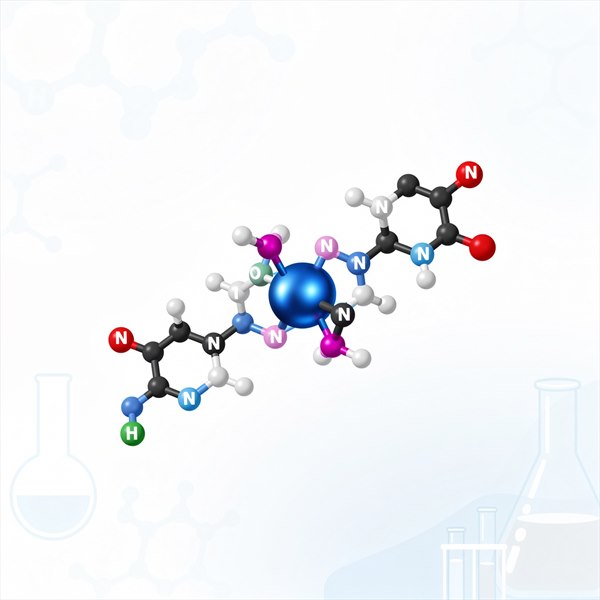
Molecular Structural Characteristics of Copper Peptide
As an active compound with a unique molecular structure, the core structural units of copper peptide include a central metal ion and a peptide chain. The central metal ion is typically a copper ion, with its coordination environment provided by amino acid residues in the peptide chain. The folding pattern of the peptide chain significantly influences the stability and function of copper peptide.
Intramolecular Interactions
The intramolecular interactions in copper peptide mainly include metal-ligand bonds and hydrogen bond networks. The bond length and angle characteristics of metal-ligand bonds directly affect the overall configuration of the molecule. Hydrogen bond networks play a crucial role in stabilizing molecular conformation, and through the formation of complex hydrogen bond networks, copper peptide can maintain a relatively stable conformation under different environmental conditions.
Impact of Environmental Factors on Structural Stability
The structural stability of copper peptide is influenced by various environmental factors, including pH and temperature. Under different pH conditions, the molecular conformation of copper peptide may change, thereby affecting its physicochemical properties. Temperature variations also impact molecular stability, with high temperatures potentially leading to the disruption of molecular conformation.
Spectroscopic Characteristics
The spectroscopic characteristics of copper peptide are an important reflection of its molecular structure. There is a significant correlation between characteristic absorption peaks and structural parameters, and spectroscopic analysis can further elucidate the molecular configuration and stability of copper peptide. Spectroscopic studies provide essential tools for the structural analysis of copper peptide.
This article is for scientific research reference only and does not constitute any medical advice.