Peptide Blog

Building Trust in International Peptide Raw Material Procurement: From Shipping Security to Hassle-Free Payment
This article systematically analyzes the key safeguards in cross-border peptide raw material procurement, covering professional packaging design to maintain lyophilized powder stability, compliant customs clearance strategies to reduce shipping risks, intelligent logistics tracking for end-to-end visibility, and flexible payment methods to improve transaction efficiency—providing researchers with a reliable full-chain solution.
2026-09-18

GHK-Cu and Epithalon: Molecular Mechanisms and Research Value in Anti-Aging and Regenerative Medicine
Drawing on molecular mechanisms and raw-material quality logic, this article explores the research value of GHK-Cu and Epithalon in anti-aging and regenerative medicine, with a focus on the technical barriers of GHK-Cu copper-ion complexation processes, the impact of batch-to-batch consistency on research outcomes, and how an online COA query system combined with an independent testing subsidy program can ensure raw-material quality.
2026-09-18

Standard Operating Procedures for Reconstitution and Storage of Research-Grade Peptides: A Laboratory Guide from Solvent Selection to Cold-Chain Management
The quality of peptide sample reconstitution and storage directly affects the reliability of experimental data. Written in an SOP style, this article outlines the logic of solvent selection, standard reconstitution steps, key temperature management considerations, and common operational errors. It is intended to help researchers maximize the structural integrity of peptide chains, minimize sample degradation and resource waste caused by improper handling, and serves as a practical laboratory management reference for lyophilized research-grade peptides.
2026-09-17

Salt Form Selection in Peptide Synthesis: From Process Fundamentals to Experimental Reproducibility
Starting from solid-phase synthesis processes, this article analyzes the formation mechanism of trifluoroacetate residues and their potential interference in in vitro research, discusses the chemical rationale and quality-control checkpoints for different salt-form conversions, emphasizes the impact of process consistency on the reproducibility of scientific results, and systematically elaborates on the central role of modern analytical techniques in salt-form confirmation.
2026-09-17

Web3 Payments Optimize Cross-Border Peptide Raw Material Procurement Efficiency
This article examines the efficiency barriers posed by traditional bank wire transfers in international peptide raw material procurement, introduces how Web3 payment methods streamline the procurement process through fast settlement, privacy protection, and account management features, and analyzes the positive long-term cost impact of top-up reward programs.
2026-09-17

Core Differences and Procurement Considerations Between Single-Target GLP-1 and Dual-Target Peptides in Research Applications
From the perspective of peptide synthesis experts, this article analyzes the core differences between single-target GLP-1 and GLP-1/GIP dual-target agonist peptides in terms of receptor binding mechanisms, synthetic process complexity, and purity standards, providing scientific reference and procurement guidance for metabolism-related basic research.
2026-09-17
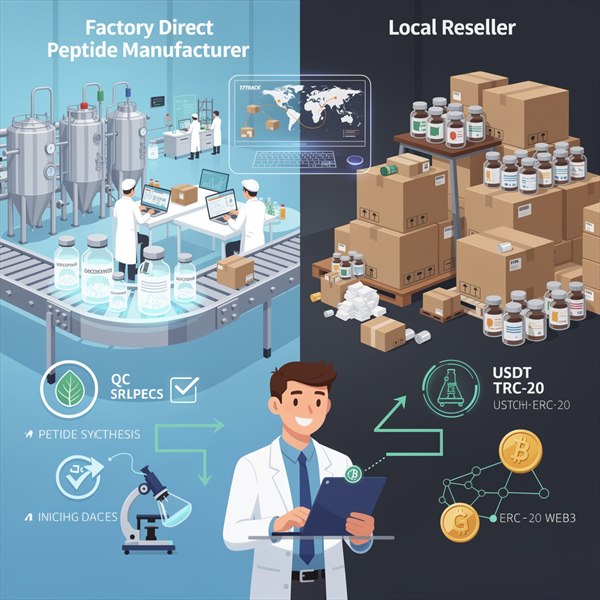
Comparison of Peptide Procurement Models: Advantages and Disadvantages of Direct Manufacturer Supply vs. Local Distributors
This article systematically compares the core differences between direct procurement from peptide manufacturers and procurement through local distributors from the perspectives of supply chain management, quality control, customized services, and global logistics and payment convenience. It analyzes the advantages and disadvantages of both models in terms of price, supply chain efficiency, product quality stability, and customization flexibility, providing research users with procurement decision-making references.
2026-09-16

Guide to Interpreting Peptide COA: A Key Tool for Research and Procurement
This article provides a guide for researchers and procurement professionals on interpreting peptide COA (Certificate of Analysis), covering basic concepts of COA, methods for interpreting HPLC chromatograms and MS data, and how to identify counterfeit traps. It also introduces a transparent online COA query system and an independent third-party testing reimbursement program to ensure the reliability of peptide quality.
2026-09-16

Critical Impact Analysis of Lyophilization Process Optimization on Peptide Product Quality
This article systematically analyzes the core aspects of lyophilization technology from the perspective of peptide manufacturing processes. It explores the influence mechanisms of parameter control during pre-freezing, primary drying, and secondary drying stages on product physical morphology and activity, examines the principles of residual moisture and sealing processes on peptide stability, and elaborates the technical value of standardized industrial-grade lyophilization curves in ensuring product instant solubility and batch consistency.
2026-09-16

Advances in BPC-157, TB-500, and Neurotrophic Peptides in Tissue Engineering and Neural Pathway Protection
This article reviews the latest research progress of BPC-157, TB-500, and neurotrophic peptides in the fields of tissue engineering and neural pathway protection, focusing on their molecular mechanisms and physicochemical properties, including key roles in angiogenesis, nitric oxide system regulation, and collagen deposition, as well as physicochemical properties such as lyophilized powder stability and solubility.
2026-09-16

Multi-Target Development of GLP-1 Receptor Agonists: Exploration of Synthesis and Purification Technologies
This article examines the technological evolution of GLP-1 receptor agonists from single-target to multi-target approaches, analyzes the challenges of fatty acid chain modification in long-sequence peptide synthesis, emphasizes the impact of peptide purity on receptor affinity experiments, and discusses the application of HPLC and MS technologies in quality control.
2026-09-16

Analysis of the Molecular Structure and Chemical Characteristics of Copper Peptide
This article systematically analyzes the molecular structural characteristics of copper peptide, including its core structural units, intramolecular interactions, and the impact of environmental factors on structural stability. It also outlines its spectroscopic features, laying the foundation for a deeper understanding of its physicochemical properties and potential applications.
2026-09-13
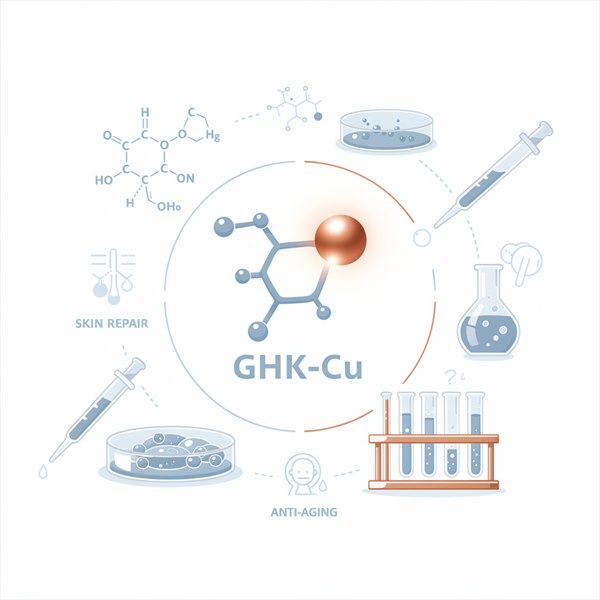
Bioactive Characteristics and Research Progress of GHKCU Peptide
As a peptide compound with a specific amino acid sequence, the molecular structure and bioactivity of GHKCU have garnered research attention. This article systematically explores the physicochemical properties, molecular interaction mechanisms, and laboratory research methods of this substance, and objectively reviews its potential applications and limitations in basic research.
2026-09-12