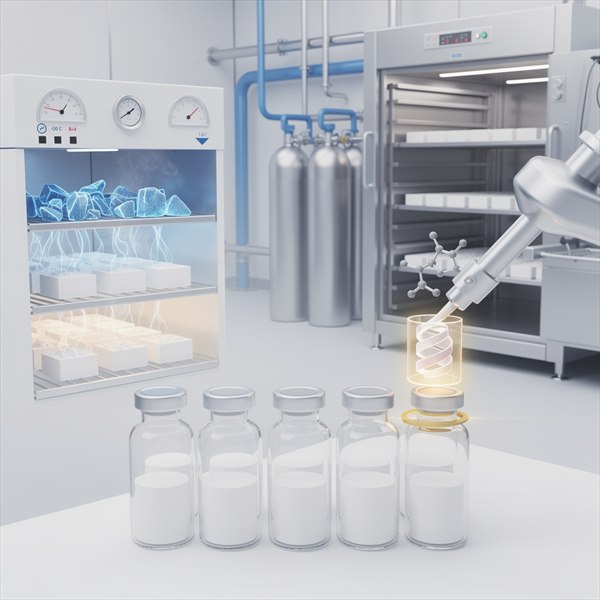
Technical Equilibrium Points in Three Stages of Lyophilization
The essence of peptide lyophilization lies in maintaining the balance between bioactivity and physical morphology. During the pre-freezing stage, precise control of cooling rates prevents molecular structure damage caused by excessive ice crystal growth. The primary drying phase requires dynamic adjustment of vacuum levels and shelf temperatures to achieve efficient moisture sublimation while preserving peptide conformation stability. The secondary drying stage employs gradual temperature increases to completely remove bound water. Temperature fluctuations or vacuum imbalances at any stage may cause product collapse or partial melting, leading to irreversible degradation of active sites.
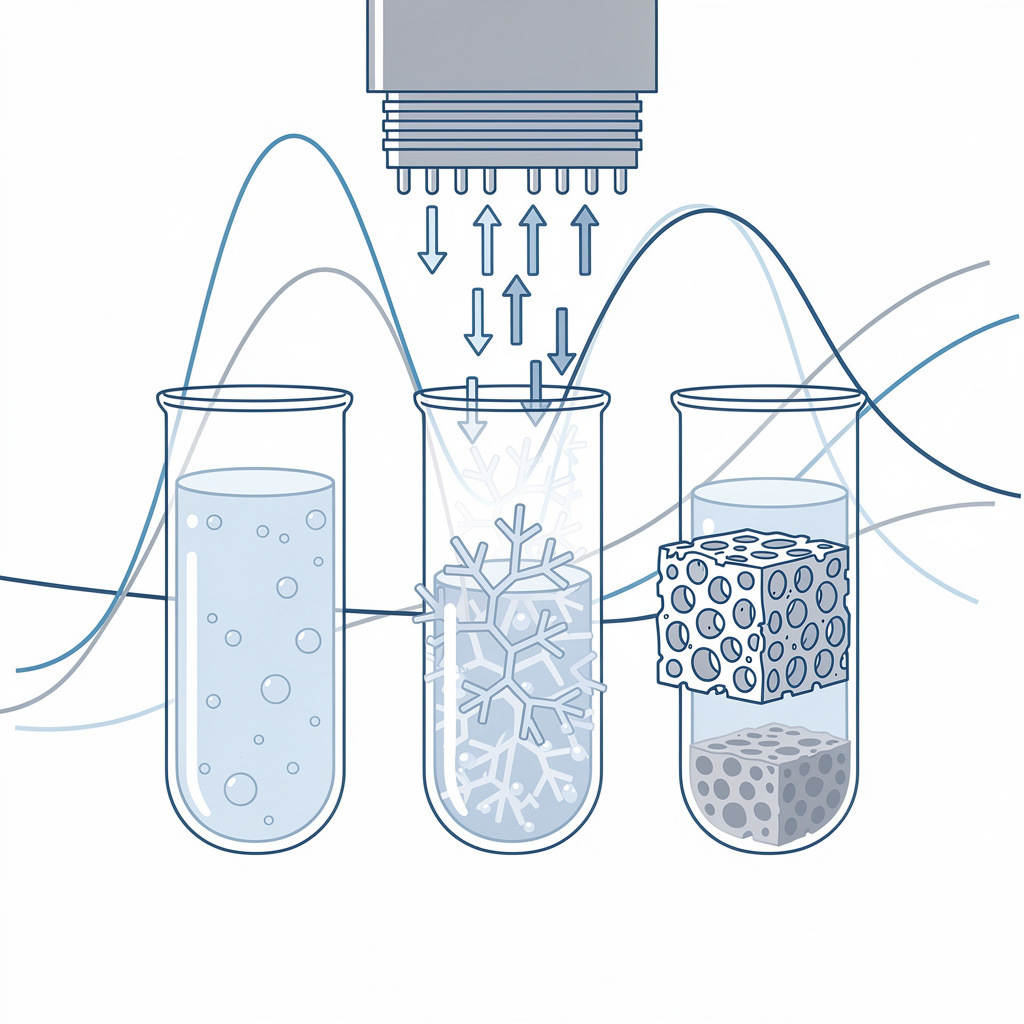
Correlation Mechanism Between Moisture Control and Transport Stability
Residual moisture content is a critical variable for long-term peptide stability. Excessive moisture accelerates hydrolysis reactions and molecular aggregation, while insufficient moisture may disrupt protein hydration layer structures. Real-time monitoring via Karl Fischer titration, combined with differential scanning calorimetry for glass transition temperature determination, can establish optimal moisture ranges for different peptide molecules. This parameter is particularly crucial for cold chain logistics, as moisture redistribution during temperature fluctuations directly affects product reconstitution rates and bioactivity.
Quality Control Loop in Industrial Production
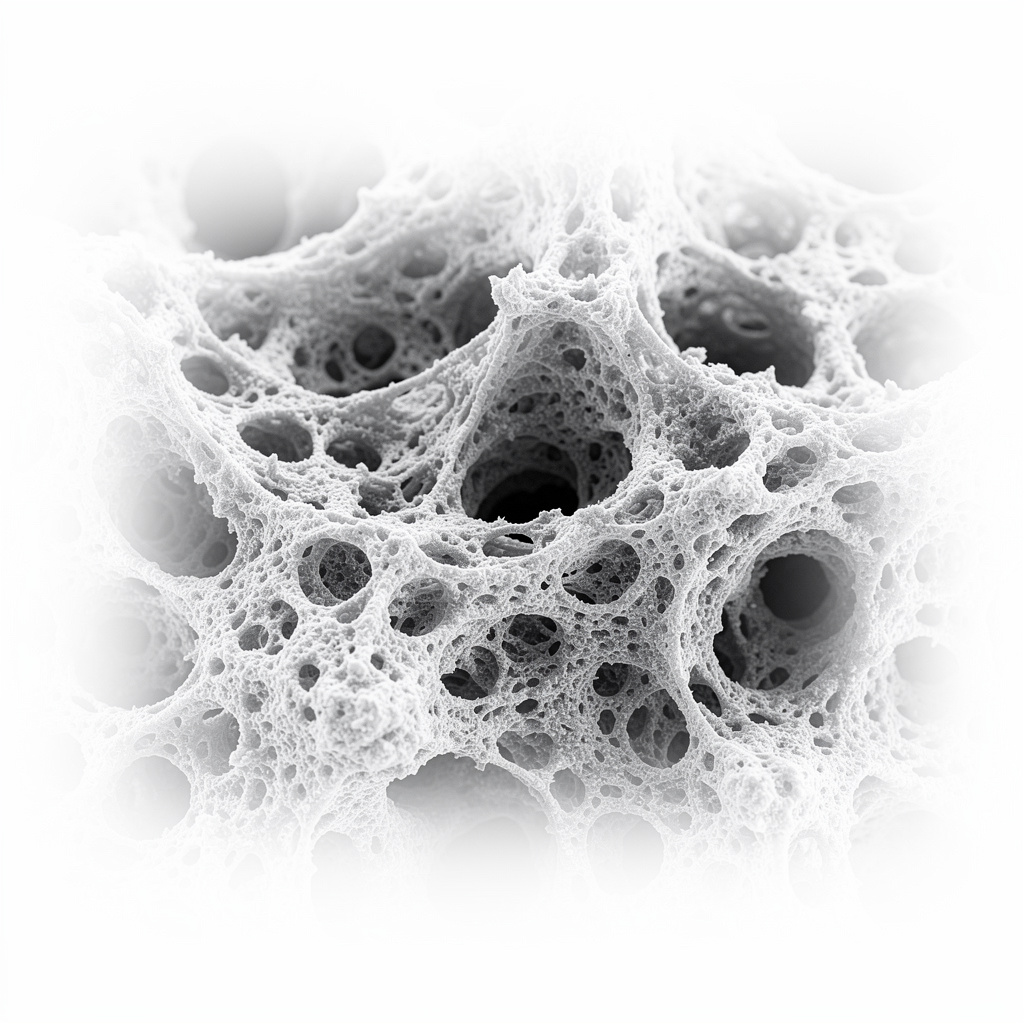
The vial sealing system ensures long-term isolation performance under inert gas protection through precise matching of rubber stopper elasticity coefficients and aluminum cap crimping pressure. Nitrogen or argon filling not only suppresses oxidation reactions but also buffers pressure variations during transportation. Establishing standardized lyophilization curves relies on hardware validations including reactor temperature distribution tests and vacuum system leakage rate measurements, ultimately achieving moisture standard deviations within technical specifications for each batch, resulting in lyophilized cakes with uniform porous structures and instant solubility characteristics.
This article is for research reference only and does not constitute any medical advice.