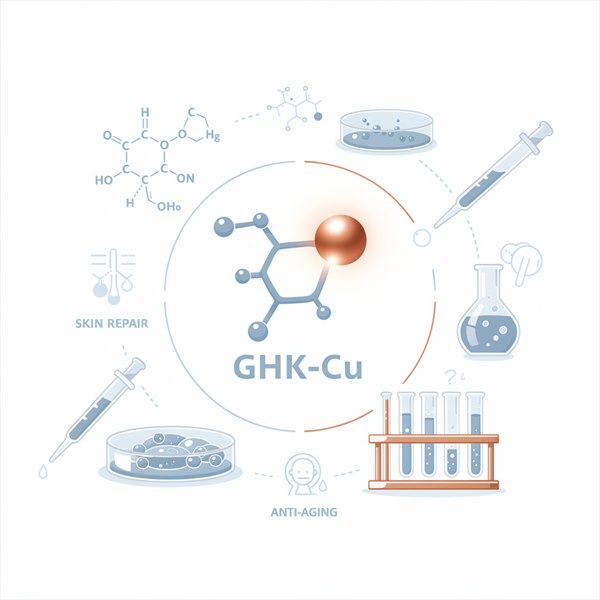
Molecular Structure and Physicochemical Properties
GHKCU is composed of a specific amino acid sequence, and its spatial conformation exhibits typical copper ion-binding characteristics. Spectral analysis reveals characteristic absorption peaks of the substance in specific wavelength regions, providing important evidence for purity detection.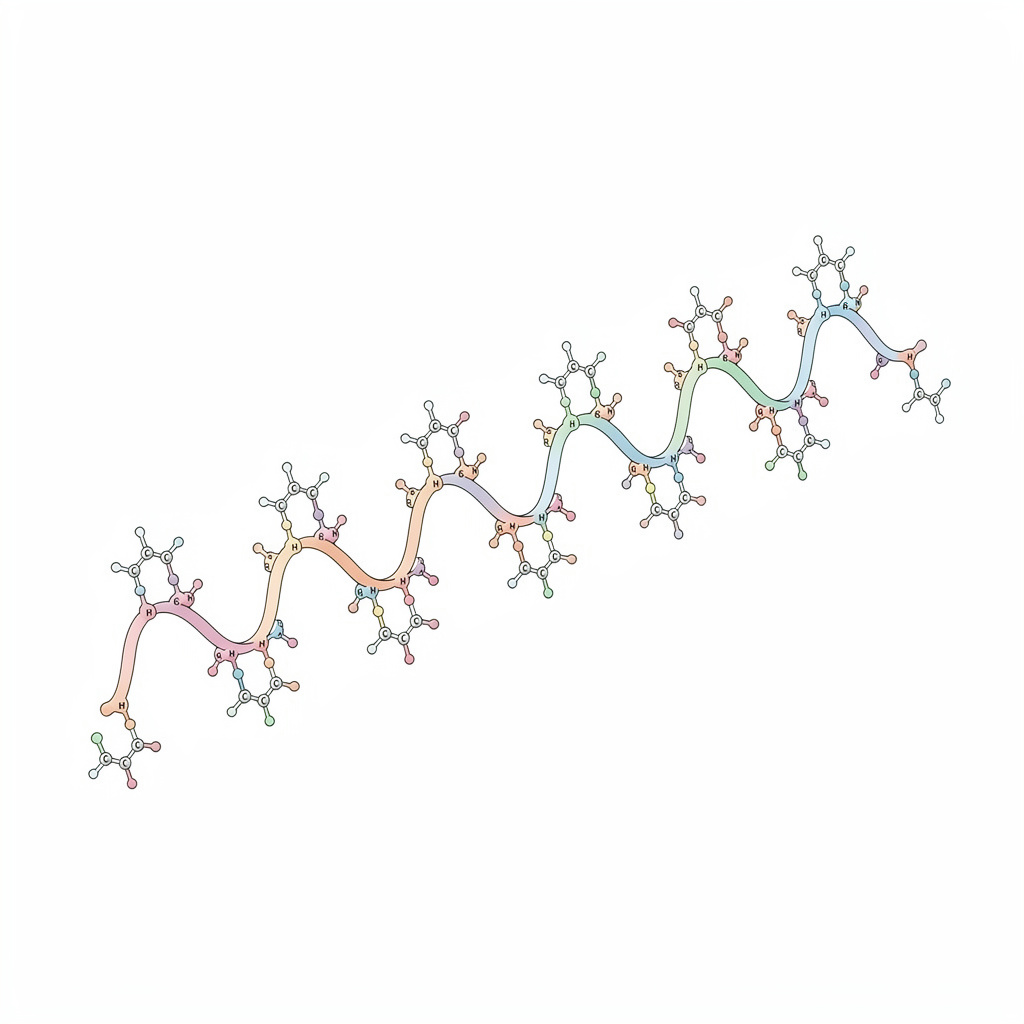
Molecular Interaction Mechanisms
Studies indicate that GHKCU can interact with certain biomacromolecules through specific molecular recognition mechanisms. This interaction primarily relies on the complementarity between active sites on the peptide chain and the surface structure of target molecules, with binding affinity significantly influenced by environmental conditions.
Experimental Research Methods
Under laboratory conditions, chromatographic techniques can be employed to separate and purify GHKCU, and mass spectrometry can confirm its molecular weight. Quality control processes should focus on parameters such as purity, solubility, and stability, as these directly impact the reliability of experimental results.
In vitro models, GHKCU demonstrates potential in modulating specific cellular functions, possibly through influencing cell signaling pathways. However, it is important to note that these findings are limited to observations under laboratory conditions and cannot be directly extrapolated to other complex systems.
Research Limitations and Prospects
Current research on GHKCU faces several technical challenges, including stability issues in different physiological environments and the need for process optimization in large-scale production. Future studies should establish more comprehensive characterization systems and explore potential applications in interdisciplinary fields such as materials science.
This article is for scientific reference only and does not constitute any medical advice.