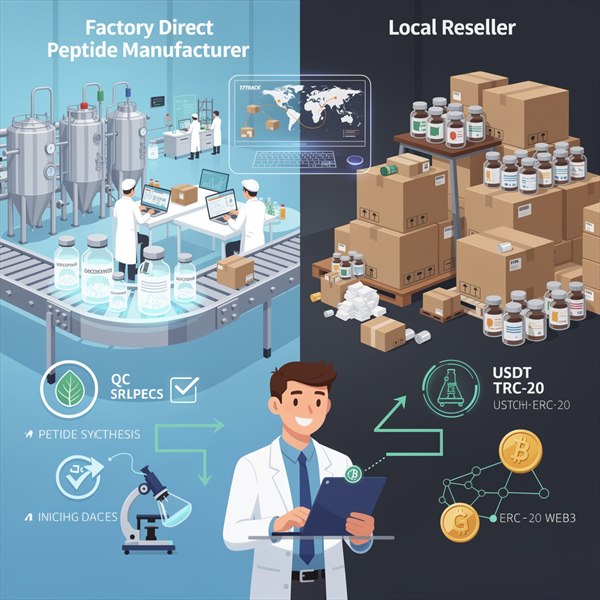
Core Differences in Peptide Procurement Models
In the procurement of research peptides, choosing between direct procurement from manufacturers or through local distributors is a decision many users face. This article systematically analyzes the advantages and disadvantages of these two procurement models from multiple dimensions to help users make more informed choices based on their needs.
Supply Chain Efficiency and Price Advantages
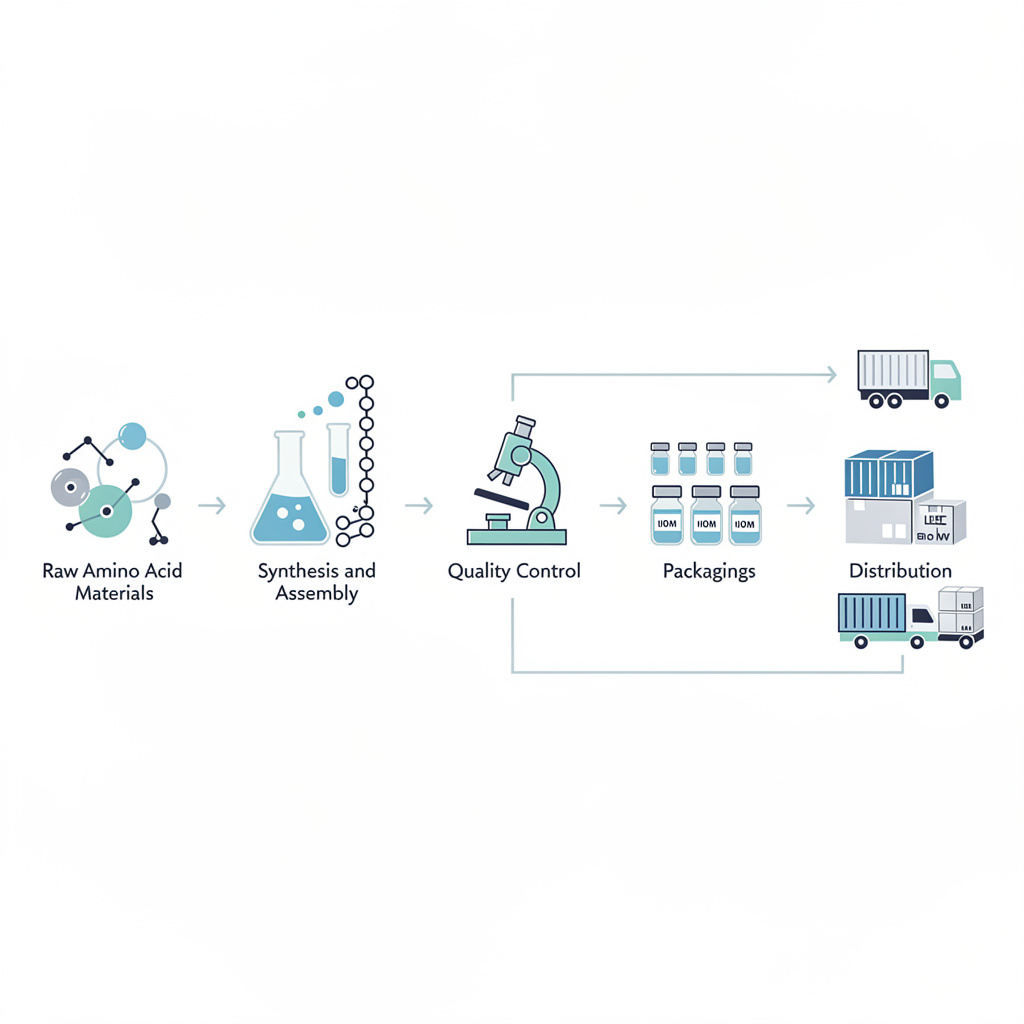
The greatest advantage of direct procurement from manufacturers lies in reducing intermediate links, thereby significantly lowering supply chain costs. This model can provide users with more competitive wholesale prices, especially for research institutions with large demand or long-term collaborative projects. In contrast, local distributors typically need to mark up prices to cover their operational costs, resulting in higher final procurement prices.
Additionally, the direct manufacturer supply model offers more efficient supply chain responsiveness. Users can communicate directly with the production side, quickly obtain product information and technical support, and reduce the layers and time loss in information transmission. This is particularly important for time-sensitive research projects.
Product Quality and Batch Stability
In terms of quality assurance for peptide products, the direct manufacturer supply model has clear advantages. Since products move directly from production to the user, intermediate storage and transportation links are reduced, maximizing the freshness and activity of the peptides. At the same time, manufacturers usually have more comprehensive quality control systems, ensuring consistency between product batches, which is crucial for research work requiring repeat experiments.
While local distributors can also provide quality certifications, the products may be affected by environmental factors such as temperature and humidity during transportation and storage due to multiple handling links, posing certain quality risks. Especially for peptide products requiring special storage conditions, the direct manufacturer supply model better ensures the product's optimal state.
Customized Services and Technical Support
In terms of customized services, the direct manufacturer procurement model has significant advantages. Users can communicate directly with the R&D team to customize specific peptide sequences based on experimental needs, including special modifications and purity requirements. This deep customization capability is particularly important for cutting-edge research projects, providing users with solutions that better fit their research needs.
Moreover, manufacturers usually have professional scientific support teams that can provide users with detailed technical consultations and application guidance, helping users better design experimental plans and optimize peptide usage. Such technical support services are often difficult to achieve with local distributors.
Global Logistics and Payment Convenience
With the development of globalization, leading peptide manufacturers have typically established comprehensive international logistics systems, providing users with convenient global delivery services. By integrating advanced logistics tracking systems, users can monitor product shipping status in real-time, ensuring timely and safe arrival at the laboratory.
In terms of payment, manufacturers usually offer diversified payment solutions, including international credit card payments, bank transfers, and other methods, providing users with more flexible and convenient payment options. At the same time, the direct manufacturer procurement model also offers users a more transparent pricing system, avoiding additional costs that may arise from intermediate links.
This article is for research reference only and does not constitute any medical advice.