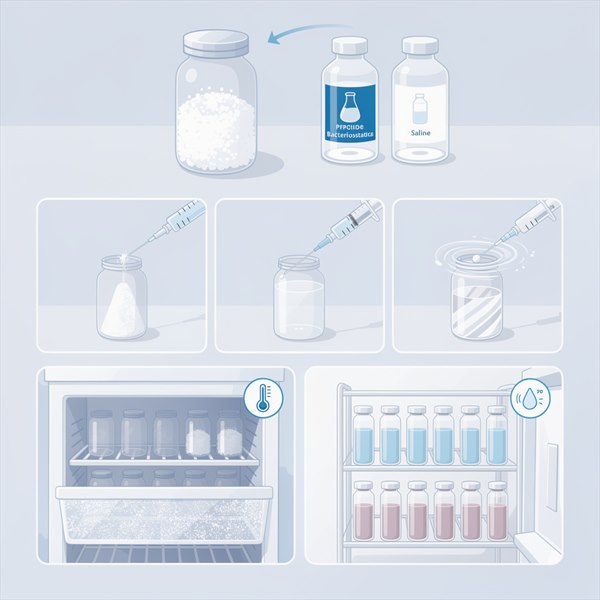
1. Solvent Selection: Practical Differences Between Bacteriostatic Water and Sterile Saline
When reconstituting research-grade peptides, the choice of solvent is the primary variable affecting sample stability and usable lifespan. The two most commonly used solvents in the laboratory are Bacteriostatic Water for Injection (BAC Water, containing benzyl alcohol) and sterile normal saline (0.9% NaCl), and the two differ substantially in their appropriate applications.
- Bacteriostatic Water (BAC Water): Benzyl alcohol acts as a preservative that inhibits microbial growth in solution, making it suitable for experimental protocols requiring multiple withdrawals from the same vial. For peptides with strong hydrophilicity and good solubility at neutral pH, BAC Water is generally the preferred solvent and can maintain the solution in a stable state for an extended period under refrigerated conditions.
- Sterile Normal Saline: Contains no antimicrobial additives, so the risk of microbial contamination accumulates over time once the vial is opened. It is therefore better suited for single-use or short-term applications. For peptide sequences sensitive to benzyl alcohol, or in experimental designs that require strict exclusion of additive interference, normal saline is the more conservative choice.
In addition, highly hydrophobic peptides may have limited solubility in pure water or saline and may require initial dissolution in a small volume of organic solvent before dilution to the working concentration with the target solvent. It is recommended to consult the product documentation or contact the supplier for solvent recommendations specific to the peptide in question before proceeding.
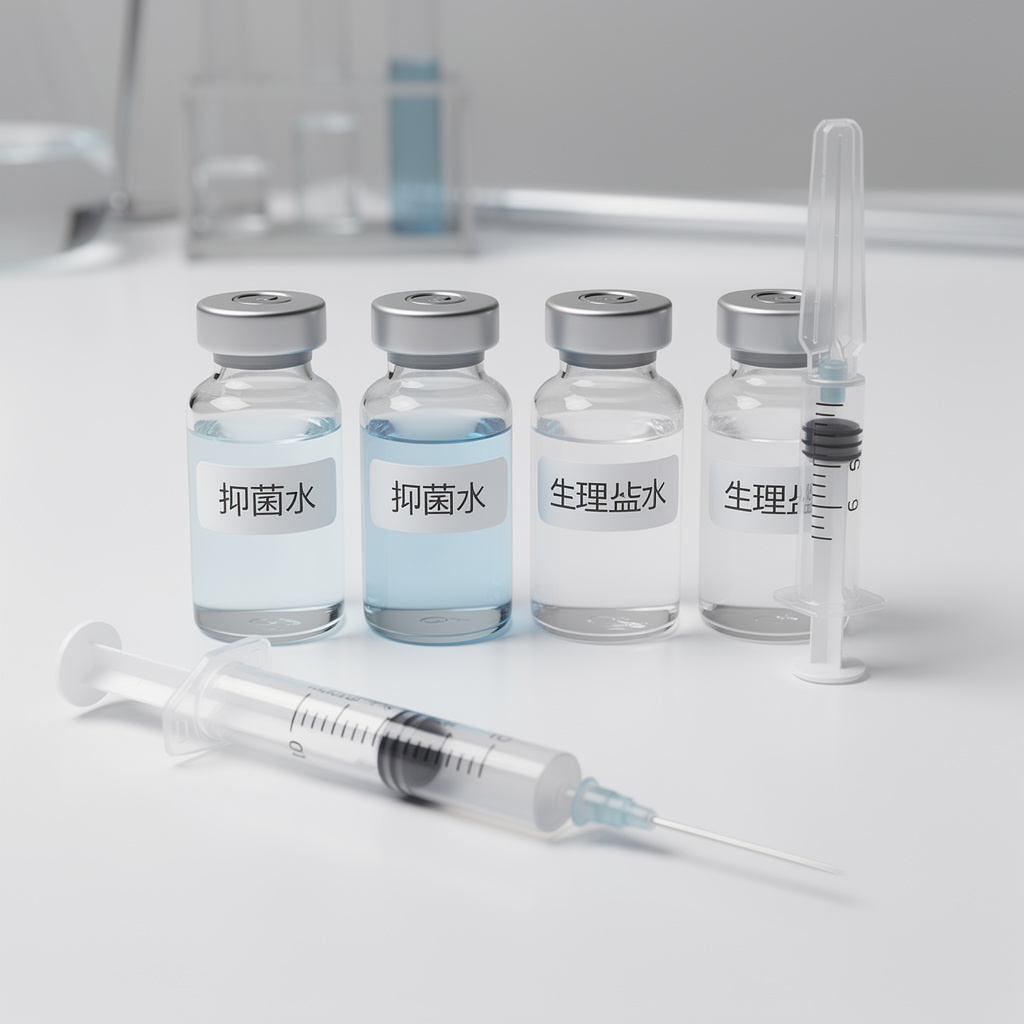
2. Standard Reconstitution Procedure
Following a standardized reconstitution protocol is critical for protecting peptide chain integrity and preventing aggregation or degradation. The steps below should be performed in the order listed:
- Step 1: Equilibrate to Room Temperature — After removing the lyophilized powder from frozen storage, do not open the vial immediately. Allow the sealed vial to warm naturally to room temperature. This step prevents condensation of ambient moisture on the cold inner walls of the vial upon opening.
- Step 2: Prepare the Solvent — Select the appropriate solvent based on the target concentration and intended use plan. Accurately measure the required volume using a sterile syringe or pipette, ensuring all instruments are clean and free of contamination.
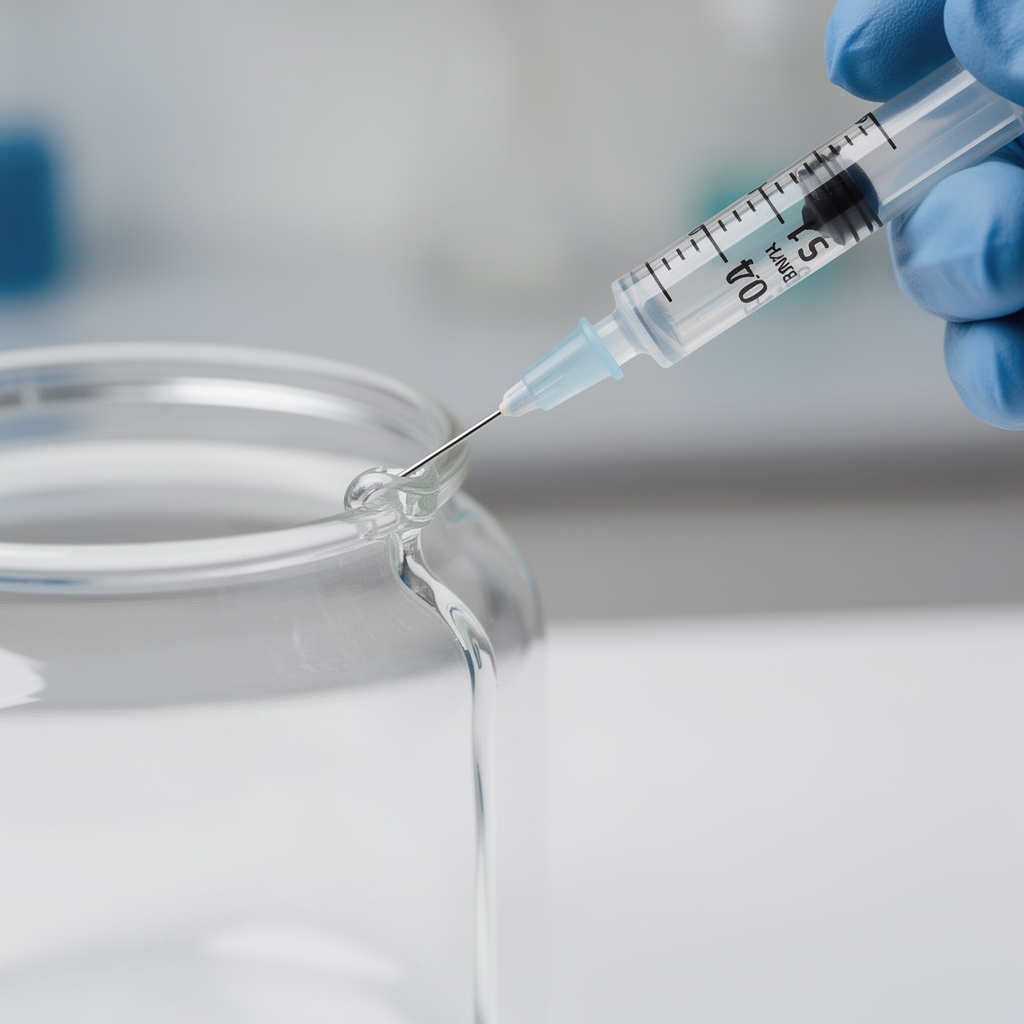
- Step 3: Inject Slowly Along the Vial Wall — Introduce the solvent slowly along the inner wall of the vial rather than directing it straight onto the lyophilized cake. Direct impingement causes abrupt local concentration changes that increase the risk of peptide aggregation or structural disruption.
- Step 4: Mix Gently — After adding the solvent, gently swirl or flick the vial to dissolve the powder. Do not vortex vigorously. If dissolution is slow, allow the sample to stand at room temperature for several minutes and then swirl gently again.
- Step 5: Visual Inspection — Once dissolution is complete, visually inspect the solution to confirm the absence of visible particles, flocculent matter, or abnormal turbidity. If any of these are observed, document the finding and confirm with the supplier.
3. Temperature Management Before and After Reconstitution
Storage requirements differ significantly between lyophilized powder and reconstituted solution forms of peptides and must be managed accordingly:
- Lyophilized Powder (Unreconstituted): Long-term storage is generally recommended at −20°C, sealed and protected from light. Sequences that are more temperature-sensitive may require storage at −80°C. Lyophilized powder stored under correct conditions exhibits relatively high stability and typically has a longer shelf life.
- Reconstituted Solution: Peptide stability in solution is significantly lower than in lyophilized form. For short-term use, storage at 2–8°C is acceptable; for longer storage, it is advisable to aliquot the solution into single-use volumes and freeze at −20°C. The practical use window for solutions is far shorter than for lyophilized powder, and large-volume reconstitution followed by prolonged storage should be avoided whenever possible.
4. Common Operational Errors to Avoid
The following practices are frequently encountered in laboratory settings but can cause irreversible damage to peptide sample quality:
- Vigorous Vortexing: The shear forces generated by a vortex mixer can disrupt the secondary structure of peptides. Gentle swirling should be used instead.
- Repeated Freeze-Thaw Cycles: Each freeze-thaw cycle causes partial degradation of peptides in solution. It is recommended to aliquot the reconstituted solution into single-experiment volumes before freezing.
- Prolonged Exposure at Room Temperature: Leaving a reconstituted solution at room temperature for an extended period accelerates oxidation and increases the risk of microbial contamination.
- Opening the Vial Without Equilibration: Opening a frozen sample directly in a room-temperature environment allows condensed water vapor to enter the lyophilized powder.
- Mismatch Between Solvent and Peptide Properties: Proceeding with reconstitution without verifying the physicochemical parameters of the peptide may result in incomplete dissolution.
5. Quality Control Background and Procurement Notes
Research-grade peptide products supplied by GDpeptides are accompanied by batch-level Certificates of Analysis (CoA) containing purity analysis, molecular weight verification, and solubility recommendations, all of which can serve as a reference for developing reconstitution protocols. Products are available in a range of formats, from single-component peptides to pre-formulated combination presentations.
When designing experimental protocols, it is advisable to estimate sample requirements in advance and plan reconstitution batches accordingly. For further guidance on solvent selection or storage strategies for specific peptides, please contact the technical support team for confirmation.
This article is intended for research reference purposes only.